 
|
Courtney Brewer
Raise your AARP membership card if remember one or more of the following:
If you are Generation X or a late Baby Boomer, you probably see a remarkable gap between the behaviors of today’s students versus how we were as undergraduate students. There are some very good reasons for that historically, which was the focus of a presentation I gave earlier this semester and have been asked to share here. On September 12, the FA and Guild co-hosted the professional development event An Evolving Community of Care, which focused on providing information about why our students behave as they do and how we can help students reshape those behaviors. The event began with FA President Dante Morelli’s overview of student communication behaviors, then, after my presentation, SCCC Director of Mental Health Services Julia Kiely and Director of Disability Services Jen Forni shared information about services for SCCC students. The only constant is change
There’s nothing new about student populations changing, but today those changes include a sharp increase in mental health issues and a serious decline in communication skills, which many of us have noticed in our students. Jonathan Haidt’s 2024 The Anxious Generation is a fascinating examination of some antecedent factors contributing to current student behaviors. It’s important to understand these causes and since our students are evolving, Courtney cautioned, so must our community of care if we are to foster the changes we know will help to make our students more successful. Haidt’s book covers shifts over the past several decades in three major areas:
1. Changes in parenting: Hearing helicopters overhead The term helicopter parent traces back to as early as 1969 and has been in use since the 1980s. For those of us whose parents definitely would’ve been called free range, the palpable shift toward overparenting might feel odd, or maybe some of us have become overly protective parents ourselves. It seems we have evolved from helicopter parenting to snowplow parenting, where every obstacle is summarily removed to make life easier for children.
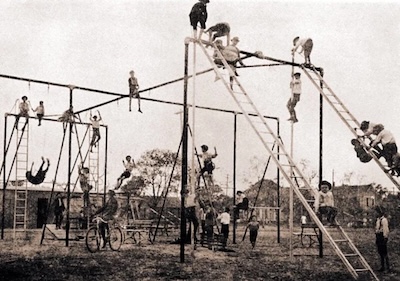
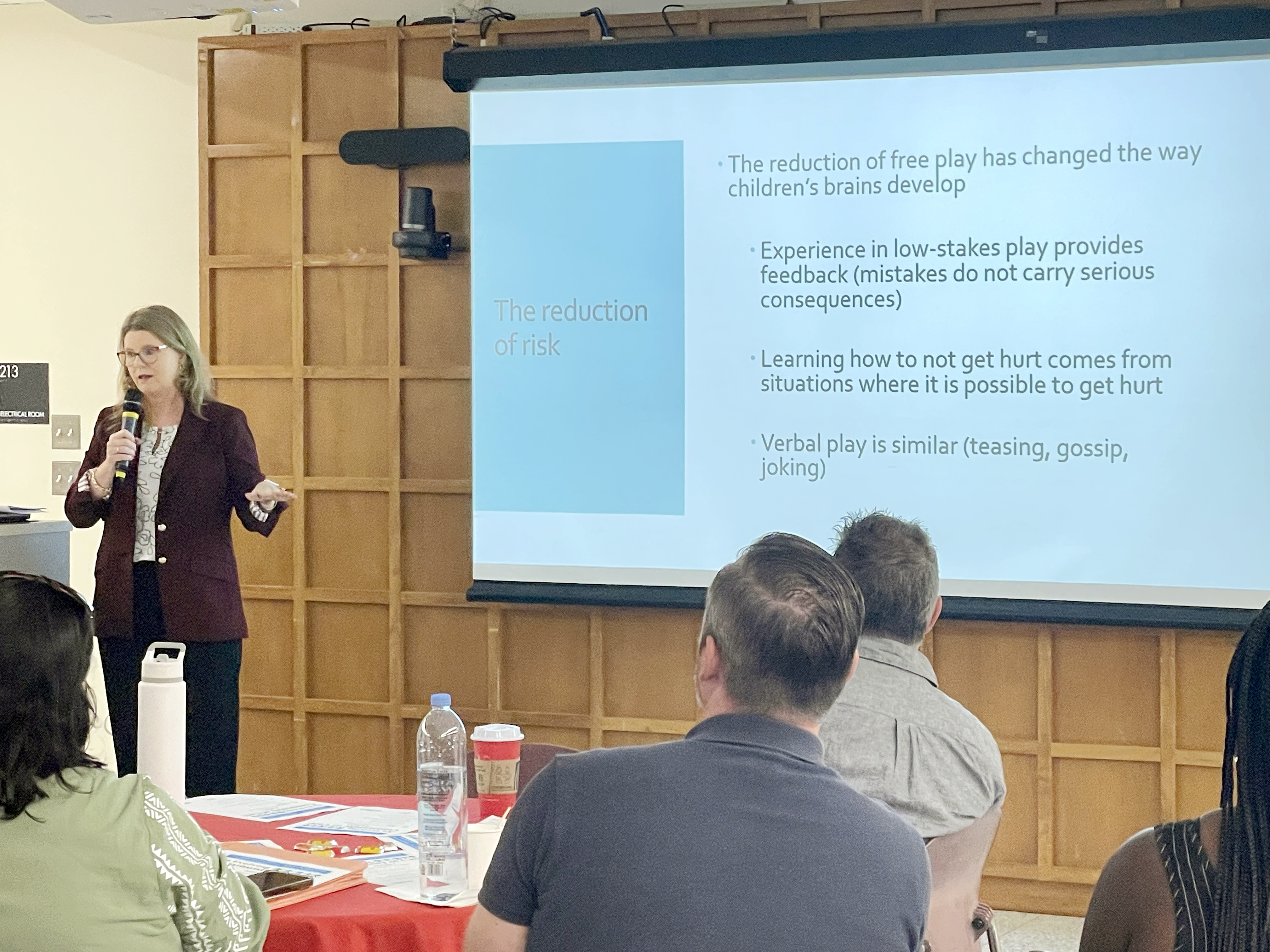
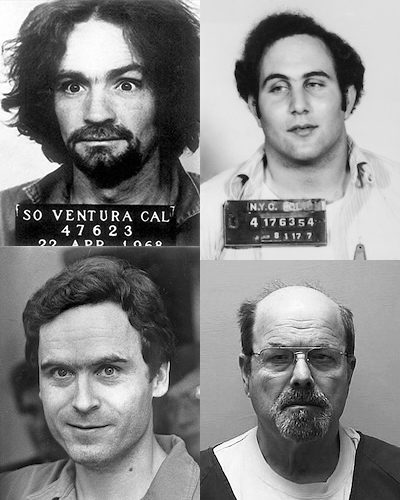
Haidt explains that as far back as the 80s, we start to see a shift towards overprotection and restriction of [children’s] autonomy. Those of us having grown up in the relatively safe suburbs of Long Island may not have experienced this, but for millions of children societal factors contributed to a culture of fear, including the general social unrest of the 60s and 70s and a widespread awareness of serial killers. With infamous serial killers on the news, this is a frightening notion that the ordinary looking neighbor could actually be a crazed murderer. In addition, there was the “Satanic panic” of the 80s and horror movies moving toward occult-themed films where ordinary looking people practice devil worship, making monsters far less recognizable. While the kidnapping of children was never a commonplace threat, the notion that children could be kidnapped and killed if they strayed past their front door became real. Many in our generations recall watching Saturday morning cartoons, then the TV was turned off and we played outside for the rest of the weekend. But in subsequent decades, outdoors came to feel dangerous to parents which further decreased outdoor play—but it was welcomed precisely because outdoors seemed so dangerous. Importantly, it’s also around the late 70s to early 80s that parents start buying home video game consoles like Atari, Odyssey and Nintendo which facilitated indoor play. 2. Changes in play: The rewards of risk With these changes in parental attitudes came a corresponding reduction of unsupervised free play. This is not good because as Haidt points out reduction of free play also means the reduction of risk, but risk is necessary for brain development. Children naturally seek risks when given the opportunity, often through play that includes heights and climbing, speed, being rough and tumble, wandering and dangerous tools or elements (fire, guns). Of course we limit access to some, but others are healthy. Just as young animals mimic hunting, stalking and fighting behaviors in their play, children use play to mimic conflict and other aspects of relationships which teaches them how to cope with these interactions. We first experience these things in our families as young children, but as our circles expand through peers, friend groups and school extracurriculars, the dynamics grow increasingly complex, giving our brains new challenges to work through. This necessarily contains risk and conflict, which is healthy because we can practice dealing with interpersonal conflict in lower-stakes situations carrying less serious consequences. But with more overly protective parenting and less unsupervised free play, children have fewer opportunities to learn to navigate such risks and conflicts for themselves. This impacts who they become as adolescents due to less experience navigating things like boundary setting, developing trust, practicing empathy toward others and understanding nonverbal communication. Most of our students are in the later stages of adolescent development and their brains aren’t done developing. Adolescence isn’t necessarily more stressful, but late adolescent brains are more sensitive to stress; they have stronger cortisol responses, read threat in situations more readily even when it does not exist and are primed toward more emotional responses. While acute stress, which comes and goes with problematic situations, is healthy so we can learn to deal with stress, chronic stress hampers our ability to cope.
More than ever, it seems students are disclosing PTSD diagnoses, and the chronic stress seems to be coming from the fact that they are in situations that require interaction. Lots are saying they were bullied and seem to have a broader definition of trauma—with difficult situations being characterized and accepted as traumatic or abusive. They are told they have trauma. No wonder their ability to handle acute stressors like being unable to find parking or figure out an assignment is declining; they haven’t had to navigate these things because of parents doing it for them. We are seeing more parents managing their children’s academic schedules in the AAMC and more parents driving their kids to campus. It seems for many students their ability to cope is declining and in some respects is being fostered by not being forced to cope. 3. Changes in technology: From Space Invaders to invading our space Now, Haidt asserts, we need to add technological changes to our mix of overparenting and less childhood free play. Of course there have always been technological advances, but in the postwar decades we mostly had TV and AM/FM radio shaping what we had access to through the late 70s. With the widespread proliferation of gaming consoles in the 80s, Internet access in the 90s, then mobile phones, smart phones and social media in the new millennium, what’s new is the rapid acceleration with which technology-mediated interactions envelop our lives. All of this has impacted our collective and individual responses to societal crises. Collective impacts: Hoarding toilet tissue Every generation faces some kind of collective trauma: war, nuclear threat, presidential assassination, 9/11. Adults have the perspective and ability to trust that “this too shall pass” which children and adolescents don’t yet have. However, past generations more often found ways to mobilize and unite when facing a crisis. For example, “with blackout requirements in England during WW2, all would turn out their lights. People largely complied. Almost no one said, “it’s my individual right to leave my lights on; you can’t tell me what to do.” We’ve lost some of our collective mentality. This increases fear when we feel threatened, since we don’t trust that we can rely on one another to stay safe. Group belonging increases safety and security, and knowing others are trying to protect us as much as we are trying to protect them is comforting. Despite all those corporate commercials during COVID trying to convince us “we’re all in this together,” we seem to have lost that.
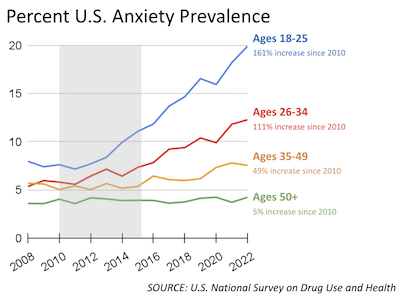
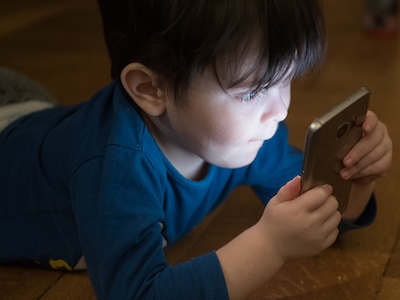
Even the hoarding behavior we saw during COVID, when toilet paper became a rare and valued prize if we could find it, was indicative of a lack of collective concern for one another, with an emphasis on an individual, out-for-oneself mentality. Social media fueled that lack of collective trust by spreading conspiracy theories, causing people to not know what to believe to stay safe, and by deepening political divisions among neighbors. Individual impacts: From play-based to phone-based childhood Haidt refers to a “surge of suffering,” by which he means a rise in anxiety and depression rates, especially in teen girls, resulting from this shift from a play-based childhood to a phone-based childhood. In The Anxious Generation, he writes, “My central claim in this book is that these two trends—overprotection in the real world and underprotection in the virtual world—are the major reasons why children born after 1995 became the anxious generation.” Plenty of us experienced bullying in school but at least we could have an escape at home; smartphones, however, have made bullying through text messages and social media apps inescapable for some adolescents. The ubiquity of smartphones and social media also disproportionately affects girls who have long been subject to the harmful message that the most valuable aspect about them is their physical appearance. Girls have always outpaced boys in anxiety and depression, but the introduction of the “like” button in 2009 accelerated this, with self-esteem being tied very closely to this kind of feedback, even from total strangers. Self-concept, our understanding of who we are, becomes entwined with public personas they have crafted in their online world. Those personas can differ greatly from the reality of who they actually are. Self-esteem, the feelings we have about ourselves, becomes dependent upon approval from others.
Interestingly, the overprotection we saw kicking off in the 80s doesn’t seem to extend to the world of technology, which is scarier with the Internet and smart phones. We also know now that any original notions about social media connecting people were quickly replaced with an awareness of how it contributes to loneliness and isolation. To better understand our current students’ behavior, it’s also useful to remember that even school has become a place where in-person peer interactions can be limited or avoided by K-12 students, who have had access to their phones all day. And the recent New York State ban on phones during the school day has been met with mixed feelings, with some parents being very unhappy. Parents often point to school shootings which appear with frightening regularity in the news, causing them to believe even schools are less safe than they are—which adds to teen anxiety. This really is not much different from the Satanic panic of decades ago: The kidnapping of children was statistically rare, just like school shootings are today, but the fear remains very real to parents. In addition, those implementing the school phone ban say that it’s safer to not clog up 911 operators with hundreds of phone calls and that fewer parents racing to the scene, obstructing roads and entrances, means more efficient and faster response. But still we see a lack of trust and an insistence upon individual parents being the only ones who can keep their child safe. The long-term collective and individual impacts of today’s technology remain to be seen. We are most certainly witnessing an unprecedented cohort of students, some of whom are coming to college for different reasons than in the past such as staying on their parents’ healthcare plan. It’s imperative that we not give in to what’s called a deficit mindset toward our students and blame them for not behaving like we did when we were in college. There’s a host of societal and individual factors shaping their behavior. But if we aim to help them, we must keep in mind that we are all products of our historical and cultural contexts and figure out how to help students become more successful not only at SCCC but also as adults. |