 
|
Courtney Brewer
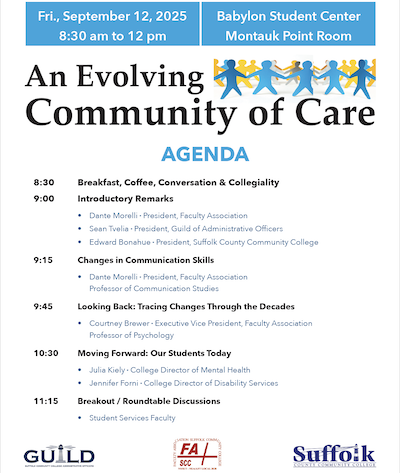
Having just completed two fully online summer courses, I am even more convinced that we need to share information about how our students really have changed, and continue to change, in ways that seem to be causing more frustration for our faculty. “This is totally my work, I didn’t use any AI at all, I just used Grammarly.” From inappropriate emails to mind-blowing requests to doubling down on what are clearly untrue claims that “I absolutely wrote this myself,” we are all feeling the change. Several of my summer students were enrolled at four-year schools just earning summer credit, but the difference was not as obvious as it once was in the not-so-distant past. These challenges are not unique, as anyone who is teaching at or who has had any conversation with faculty from other institutions will tell you. I know that professors have been complaining about students as long as higher education has existed, and I hate to think I’m becoming that cranky, complaining old person who walks the halls railing against what I perceive as requests that I never would have dreamed of asking for when I was a student. But if I’m headed in that direction, I really want to try to find solutions not just for myself but also for my many colleagues who are classroom faculty and who can sympathize. Our colleagues in student services are also feeling the pressure to support students who have increasingly more serious issues. Anxiety and depression are rampant among high school and college students, but other mental health issues are also increasing in frequency among our student population. These are the students who are sitting in front of us or enrolled in our online sections, so if we are to meet their needs, we need some insight. An Evolving Community of Care What is happening to our students—and why? Is it the pandemic? Is it something happening in the high schools, social media, cell phones, the political environment, economic challenges, changes in parenting? Part of improving any interpersonal interaction includes understanding what is causing the challenging behavior to begin with. We will be hosting a professional development event on Friday, September 12, during which we will examine some of the antecedent factors that have helped create a generation of students who seem to not only lack communication skills but who are also suffering from mental health issues at unprecedented rates. Our students are evolving—and so must our community of care if we are to foster the changes we know will help to make them more successful. Finding solutions Knowing why is important, but we also want to know what to do.
The start of the fall semester is an exciting time, full of potential and optimism. Too many faculty are feeling the loss of that optimism in the face of what feels like an entirely new breed of student. |